
CCIYT-Syllabus
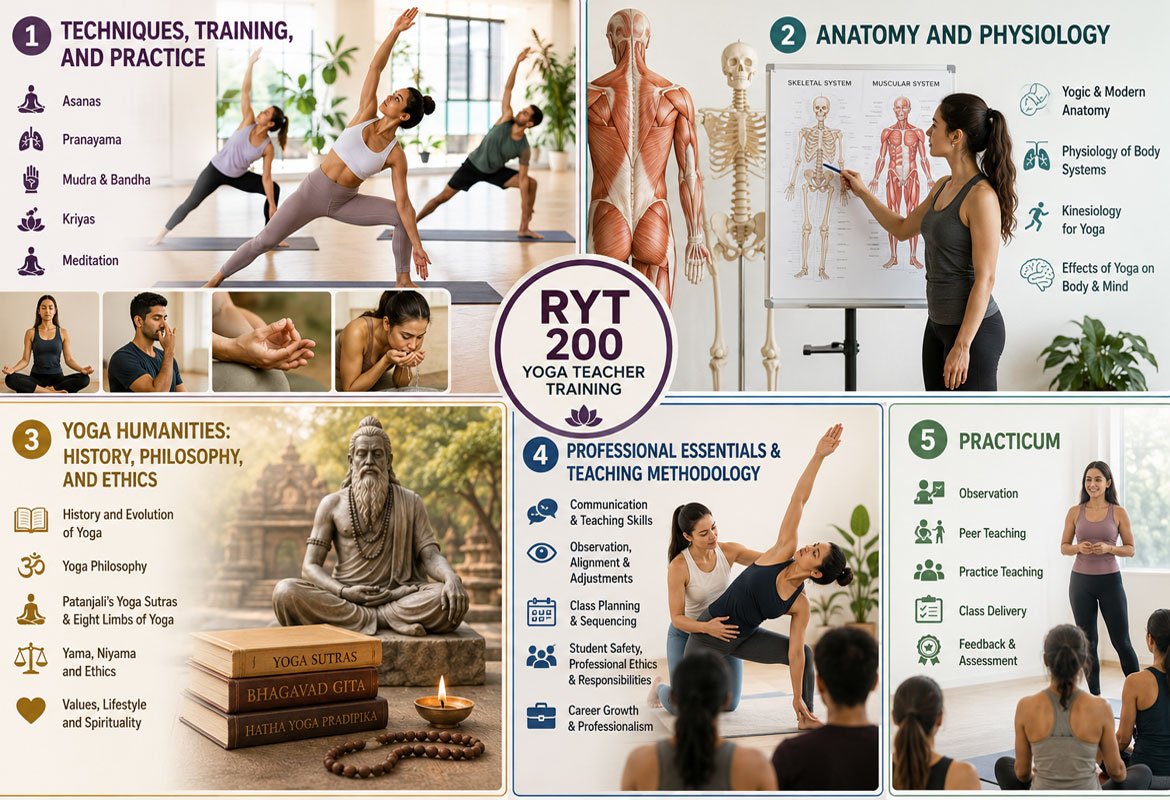
RYT 200 Yoga Teacher Training Programme
Total Guided Learning Hours: 200
MODULE 1
1. Techniques, Training and Practice (75 Hours)
Theory of Yogic Practices (15 Hours)
Definition and true understanding of Yoga
General and specific principles of Yoga practices
- Asana
- Pranayama
- Bandha
- Mudra
- Dhyana (Meditation)
Guidelines for safe and effective Yogic practice
Effects of Yogic practices on the various systems of the body
Practical Training (60 Hours)
Asanas
Meditative and Sitting Postures
Swastikasana
Ardha Padmasana
Vajrasana
Mudras and Bandhas
Brahma Mudra
Simha Mudra
Jihva Bandha
Yoga Mudra
Forward Bending and Twisting Postures
Vakrasana
Paschimatanasana
Backward Bending Postures
Bhujangasana
Ardha Shalabhasana
Shalabhasana
Dhanurasana
Supta Vajrasana
Chakrasana
Inverted Postures
Viparita Karani
Sarvangasana
Halasana
Balancing Postures
Vrikshasana
Strengthening and Conditioning Postures
Parvatasana
Ardha Halasana
Naukasana
Utkatasana
Relaxation Postures
Makarasana
Shavasana
Kriya
Kapalabhati
Pranayama
Anuloma-Viloma
Ujjayi Pranayama
Meditation
Breath Awareness Meditation
Mantra Meditation
For each practice students will learn:
Purpose and benefits
Contraindications
Teaching points and cues
Modifications and adaptations
Common errors and corrections
Progressive teaching methodology
2. Anatomy and Physiology (30 Hours)
Yogic Anatomy and Physiology
Introduction to Yogic Physiology
Panchakosha concept
Prana and the Pranic Body
Nadis and Chakras: Traditional Understanding
Modern Anatomy and Physiology
Principles of Human Anatomy
Principles of Human Physiology
Principles of Kinesiology applicable to Yoga
Musculoskeletal system and Yoga
Respiratory system and Yogic breathing
Nervous system and relaxation response
Cardiovascular responses to Yoga practice
Effects of Yogic practices on:
- Skeletal system
- Muscular system
- Respiratory system
- Cardiovascular system
- Digestive system
- Endocrine system
- Nervous system
3. Yoga Humanities: History, Philosophy and Ethics (30 Hours)
History of Yoga
Origin and evolution of Yoga
Major traditional schools of Yoga
Development of modern Yoga
Yoga Philosophy
Introduction to Patanjali's Yoga Sutras
Eight Limbs of Ashtanga Yoga
Concept of Chitta, Vritti and Nirodha
Yama and Niyama in daily life
Introduction to Hatha Yoga traditions
Yoga Ethics
Ethical responsibilities of a Yoga Teacher
Professional conduct and boundaries
Respect for diversity and inclusivity
Student safety and well-being
Yoga as a lifelong practice
4. Professional Essentials and Teaching Methodology (55 Hours)
Teaching Skills
Principles of effective teaching
Communication skills
Observation skills
Demonstration techniques
Verbal and non-verbal cueing
Correction and adjustment techniques
Managing individual and group classes
Class Planning and Sequencing
Principles of sequencing
Warm-up and preparation
Main practice section
Relaxation and closure
Planning classes for:
- Beginners
- Older adults
- Fitness clients
- Mixed ability groups
Professional Practice
Scope of practice of a Yoga Teacher
Professional responsibilities
Risk management and safety
Client screening and readiness
Integrating Yoga into fitness programmes
Yoga as one of the eight training technologies used by fitness professionals
Documentation and record keeping
Business and career development for Yoga teachers
5. Practicum (10 Hours)
Students will progressively develop and demonstrate teaching competence through supervised practice.
Teaching Practice Requirements
Observation of teaching sessions
Peer teaching
Small group teaching
Teaching selected asanas
Teaching pranayama practices
Teaching meditation practices
Class planning and delivery
Practical teaching assessment
Students must successfully conduct and evaluate complete Yoga sessions under tutor supervision before certification.
Total Hours
| Category | Hours |
| Techniques, Training & Practice | 75 |
| Anatomy & Physiology | 30 |
| Yoga Humanities: History, Philosophy & Ethics | 30 |
| Professional Essentials & Teaching Methodology | 55 |
| Practicum | 10 |
| TOTAL | 200 Hours |
This structure aligns with Yoga Alliance RYT 200 educational categories while preserving the traditional LYI(I) and Dr. Manmath Gharot’s approach to Yoga teaching.