
PILBAR-Introduction
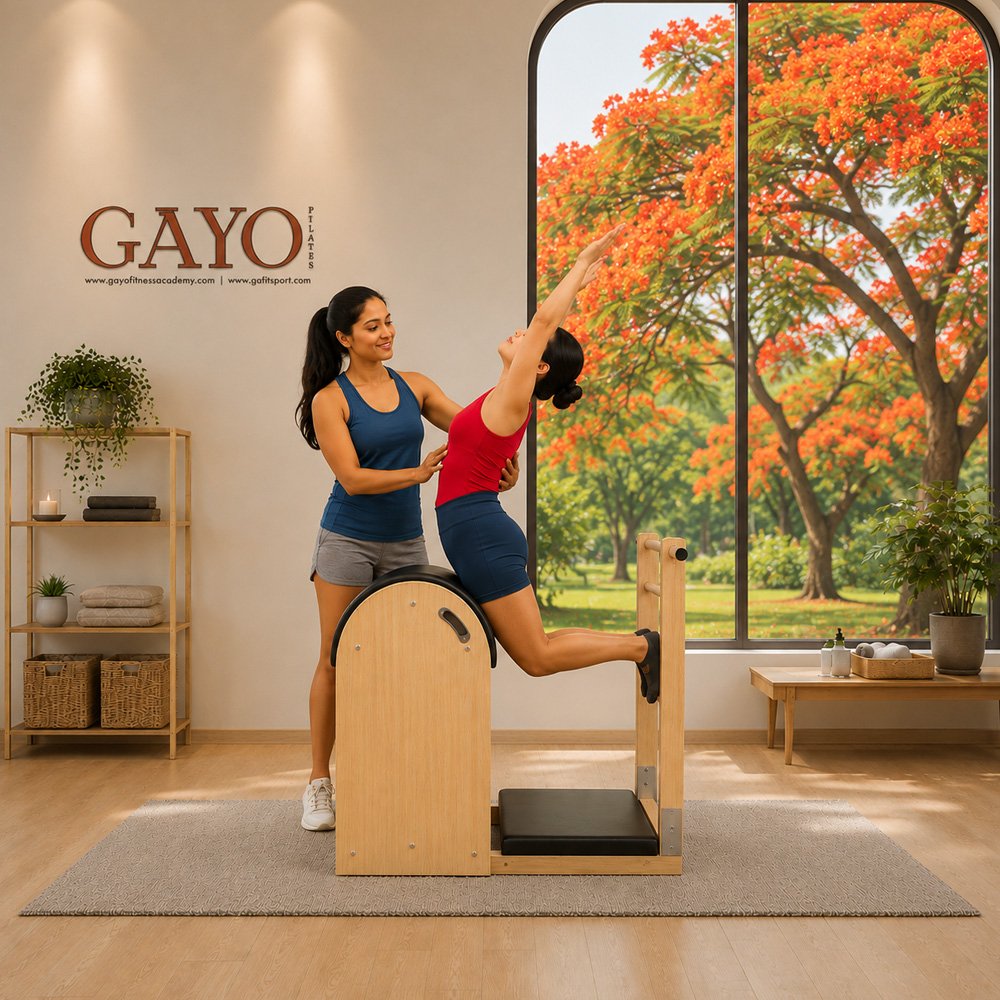
The Ladder Barrel and Spine Corrector in Pilates
The Ladder Barrel is one of the classic pieces of Pilates equipment designed by Joseph Pilates. It consists of a curved padded barrel attached to a wooden ladder with adjustable distance between the barrel and the rungs. The unique design allows the body to move through a wide range of motion while being supported by the curved surface.
The Ladder Barrel is primarily used to improve spinal mobility, flexibility, postural alignment, core strength, balance, and body awareness. Exercises can be performed in flexion, extension, lateral flexion, and rotation, making it one of the most versatile apparatuses in a Pilates studio. It is particularly effective for stretching tight muscles of the back, hips, shoulders, and lower limbs while simultaneously strengthening the core and postural muscles.
Pilates teachers benefit greatly from specialized Ladder Barrel training. A thorough understanding of this apparatus enables instructors to teach safe and effective spinal movement patterns, improve client posture, and address common movement dysfunctions.
The Ladder Barrel is valuable for working with a wide range of clients, including athletes, office workers, older adults, and individuals seeking improved flexibility and movement quality. Teacher training helps instructors learn appropriate exercise progressions, modifications, spotting techniques, and client-specific programming.
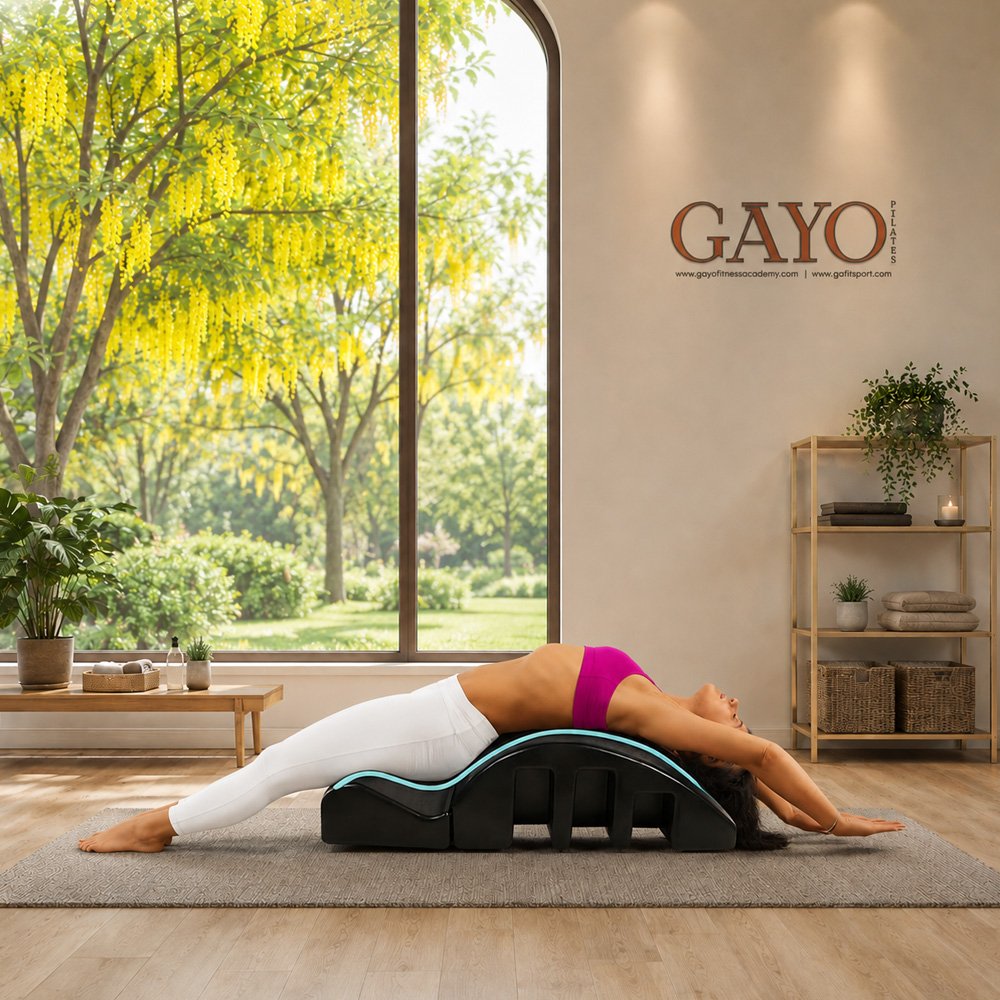
The Spine Corrector, sometimes referred to as the Small Barrel, complements the Ladder Barrel by focusing on spinal alignment, postural correction, breathing mechanics, and core activation. Its smaller curved surface provides support for the thoracic and lumbar spine while allowing targeted mobility and strengthening exercises. The Spine Corrector is particularly useful for improving thoracic extension, opening the chest, enhancing rib cage mobility, and developing pelvic stability.
Together, the Ladder Barrel and Spine Corrector provide Pilates teachers with powerful tools for improving posture, movement efficiency, flexibility, spinal health, and functional strength.
Mastery of these apparatuses expands a teacher’s ability to deliver safe, effective, and highly individualized Pilates programmes.