
FFC-Learning Outcomes
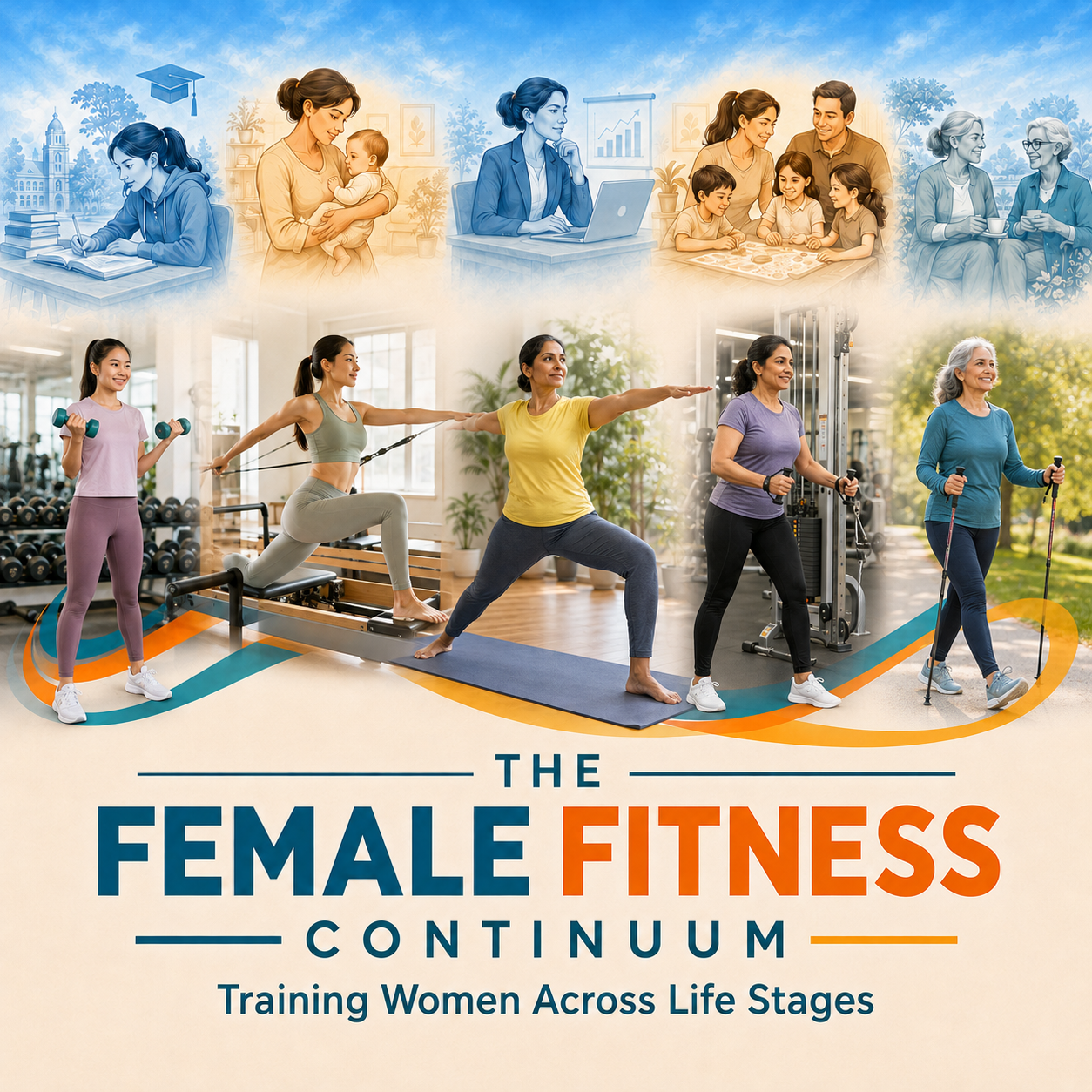
On completing the Female Fitness Continuum workshop, the practitioner will be able to:
Understand female development across the lifespan – Explain the important physiological, psychological and physical changes experienced by girls and women—from childhood and adolescence through the reproductive years, midlife, menopause and active elderhood.
Recognise female-specific physiological influences – Understand how anatomy, hormones, menstrual health, pregnancy, postnatal recovery, perimenopause, menopause and ageing may influence exercise capacity, energy, recovery and training needs.
Assess the woman as an individual – Evaluate each client’s age, health history, physique, musculoskeletal condition, aerobic fitness, metabolic status, emotional well-being, lifestyle, goals and exercise experience before planning training.
Design safe, stage-appropriate exercise programmes – Develop and adapt programmes for strength, aerobic endurance, mobility, balance and functional fitness according to the woman’s life stage, abilities, medical considerations and personal objectives.
Respond to physical and emotional fluctuations – Recognise changes in energy, mood, motivation, exercise tolerance and recovery, and modify training volume, intensity, exercise selection and progression without stereotyping or underestimating the client.
Practise respectful, woman-centred coaching – Communicate with empathy, professional sensitivity and respect while supporting confidence, autonomy and lifelong participation in fitness. Male and female practitioners will learn to appreciate each woman’s individuality rather than apply a one-size-fits-all approach.
The workshop will add valuable, immediately applicable skills to the professional toolkit of personal trainers and other exercise practitioners—helping them train girls and women safely, scientifically and respectfully from approximately age six through every subsequent stage of life.