
FFC-Introduction
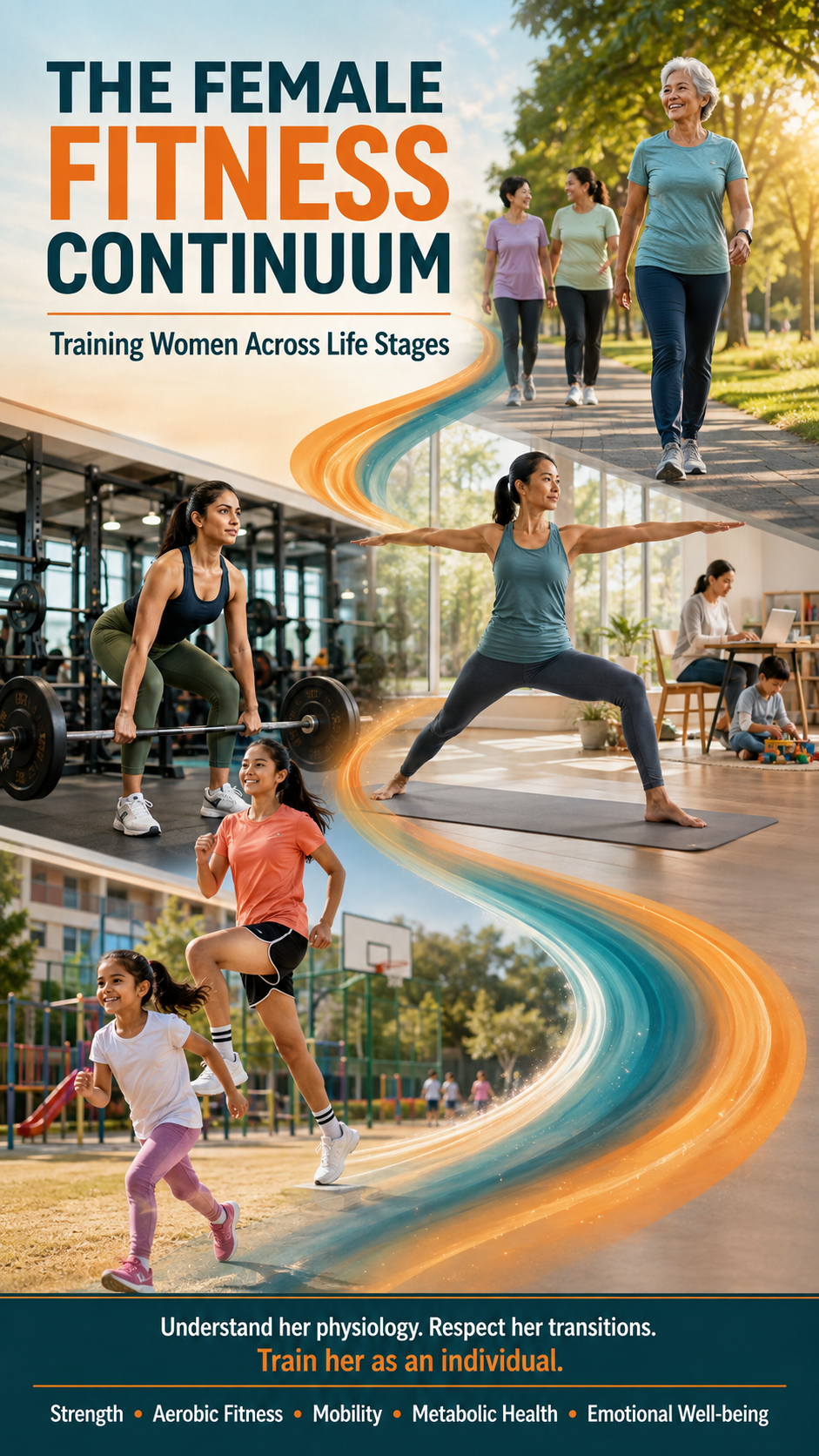
A woman’s fitness needs continually evolve. From infancy and childhood through adolescence, the reproductive and mature years, the transitions of midlife, and into active elderhood, physical activity plays a vital role in supporting healthy growth, movement competence, bone and muscle development, metabolic health, reproductive well-being, emotional balance, independence and quality of life.
Women possess remarkable physiological resilience. In many forms of prolonged or submaximal physical activity, they may demonstrate considerable endurance, fatigue resistance and capacity for sustained effort. However, training women effectively requires more than applying general exercise principles or simply modifying programmes originally designed around male physiology.
Female health and performance are influenced by a complex interaction of anatomy, hormones, metabolism, musculoskeletal structure, psychology, lifestyle and life stage. Menstrual-cycle variations may affect some women’s energy, recovery, temperature regulation, mood and exercise tolerance, although these responses are individual and do not always follow a fixed 28-day pattern. Pregnancy, the postnatal period, perimenopause, menopause, ageing and changing personal responsibilities introduce further physical and emotional considerations.
Ignoring these factors—or relying on rigid, one-size-fits-all programming—may contribute to inappropriate training loads, inadequate recovery, fatigue, discomfort, increased injury risk and inconsistent progress. A competent fitness professional must therefore understand, respect and respond to each woman’s individual physiology, health status, goals and lived experience.
The Female Fitness Continuum is a blended training workshop designed to help fitness professionals train women scientifically, sensitively and safely across the lifespan. Participants will learn to design adaptable programmes that develop strength, aerobic fitness, mobility and musculoskeletal health while supporting metabolic, hormonal and psychological well-being.
The objective is not to treat women as fragile, but to recognise their individuality, resilience and changing needs—enabling them to remain strong, capable, confident and physically active at every stage of life.
The participants in this training program will be certified as practitioners who will then be able to positively influence the qualitative life of a woman.