
CCREF-Introduction
The Pilates Reformer is a spring-resistance exercise apparatus with a moving carriage that develops strength, flexibility, posture, balance, and control. Joseph Pilates developed the Reformer during the 1920s.
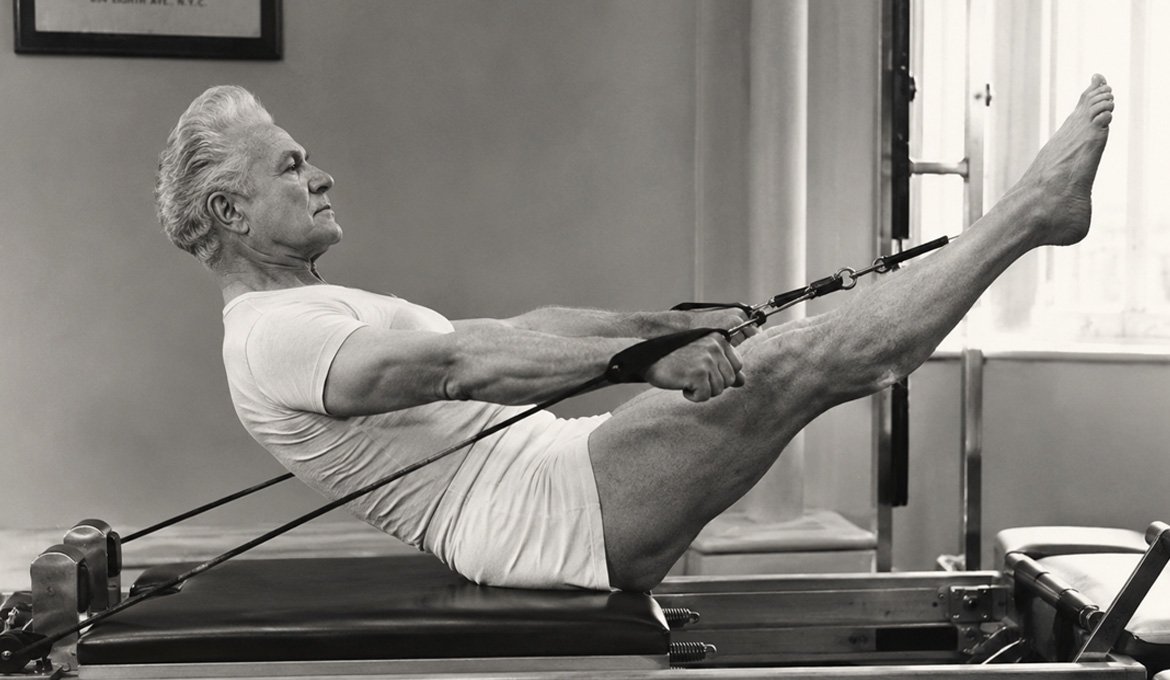
By way of introduction, we answer these FAQs.
To develop myself as a Pilates teacher, why must I master matwork?
Matwork is the foundation of the entire Pilates system. Every exercise performed on the apparatus is built upon the principles first learned on the mat, including breathing, core activation, alignment, stability, mobility, control, concentration, precision, and flow.
When you master matwork, you learn to teach movement using the client’s own body weight rather than relying on springs or equipment. This develops a deeper understanding of exercise technique, movement correction, and progression. A strong matwork background enables you to teach clients of different ages, abilities, and fitness levels more safely and effectively.
In short, the better your matwork skills, the stronger your foundation as a Pilates professional.
Mat: Ultimate Goal
To Joseph Pilates, the Mat-to-Apparatus Relationship was flexible. He did not teach a rigid, linear path where a student had to “graduate” from the Mat before touching a machine. Instead, he used them simultaneously.
However, to him. the Mat was the Ultimate Goal: he considered the unassisted floor work to be the hardest part of his system because you have no mechanical help.
The Apparatus was the Instructor: If a student struggled to articulate their spine during the Mat Roll Up, Pilates would immediately put them on the Reformer or Tower. The springs and straps provided the physical assistance and tactile feedback needed to build the correct movement patterns. Once learned, the student returned to the Mat to perform it unassisted.
I am a certified Pilates matwork teacher. Why should I complete a Pilates on Ball course before doing Reformer?
The Pilates Ball acts as a bridge between matwork and apparatus-based Pilates. While matwork develops body awareness and control, the ball introduces instability, balance challenges, proprioception, and three-dimensional movement patterns.
Working with the ball teaches you how to:
- Improve core recruitment and spinal stability.
- Progress or regress exercises for different clients.
- Enhance balance, coordination, and movement control.
- Understand how external equipment influences movement quality.
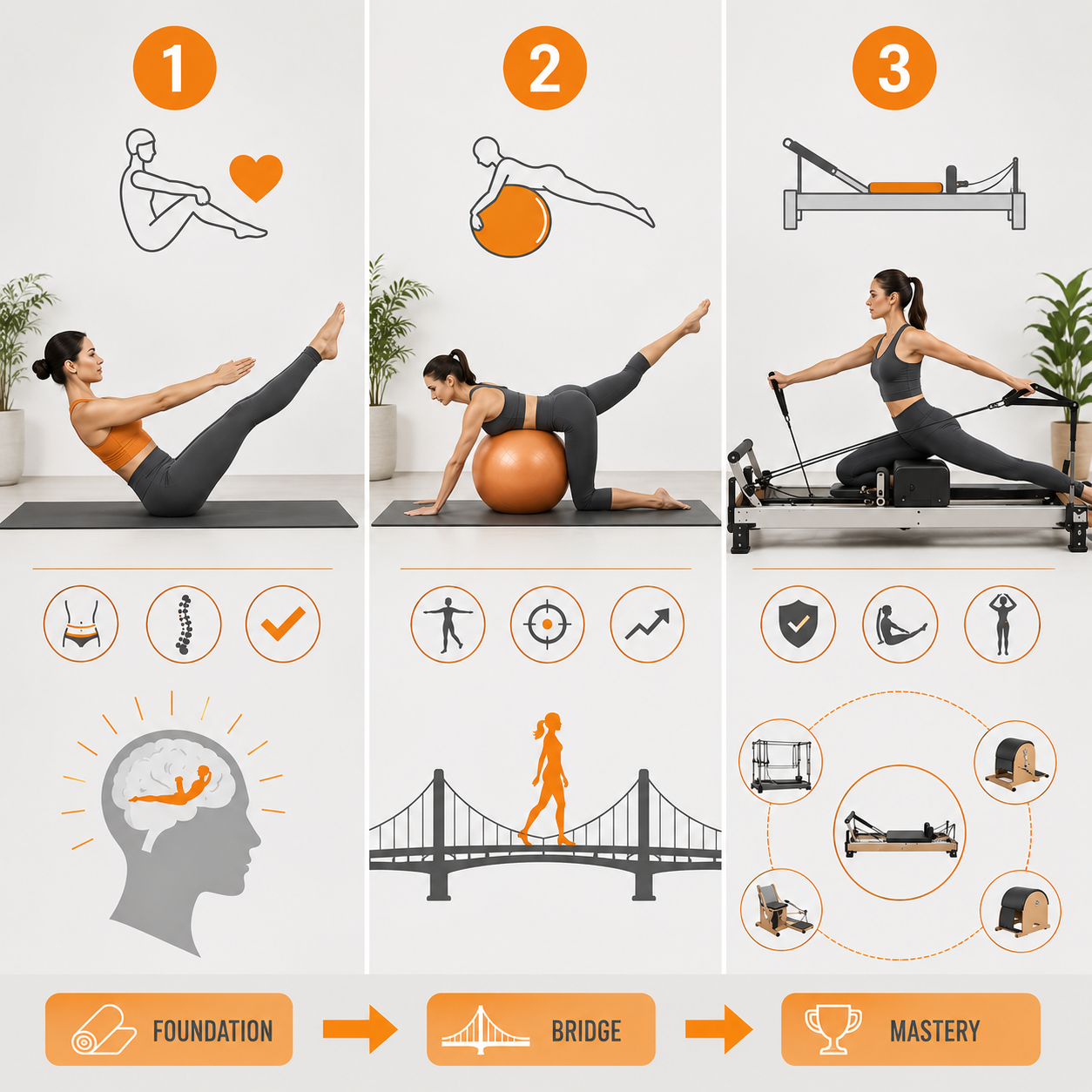
These functional skills are extremely valuable when progressing to the Reformer, where clients must control moving platforms, springs, and changing resistance. The ball therefore provides a safer and more gradual transition from body-weight exercises to equipment-based training.
Note:
Joseph Pilates did not recommend this sequence. In fact, he never used or taught with an exercise ball which an Italian toy maker developed in the early 1960 and used by Swiss physical therapists. Pilates passed away in 1967.
What is the Reformer? Does it help me master other apparatus?
The Reformer is the most versatile and widely used apparatus in the Pilates system. It consists of a moving carriage, adjustable springs, straps, ropes, shoulder blocks, and a footbar that create variable resistance and support.
The Reformer allows hundreds of exercises for strength, mobility, stability, flexibility, posture correction, rehabilitation, and athletic conditioning. It can accommodate beginners, seniors, rehabilitation clients, and elite athletes alike.
Yes, mastering the Reformer significantly helps you learn other apparatus such as the Cadillac, Chair, Barrel, and Spine Corrector. Many of the movement patterns, Pilates principles, spring-resistance concepts, exercise progressions, and teaching skills used on these apparatus are first encountered on the Reformer.
For this reason, we believe the learning pathway to be:
Matwork → Ball → Reformer → Cadillac, Chair, Barrel, and other specialist apparatus.
A strong Reformer foundation makes the transition to advanced apparatus faster, safer, and more effective.